

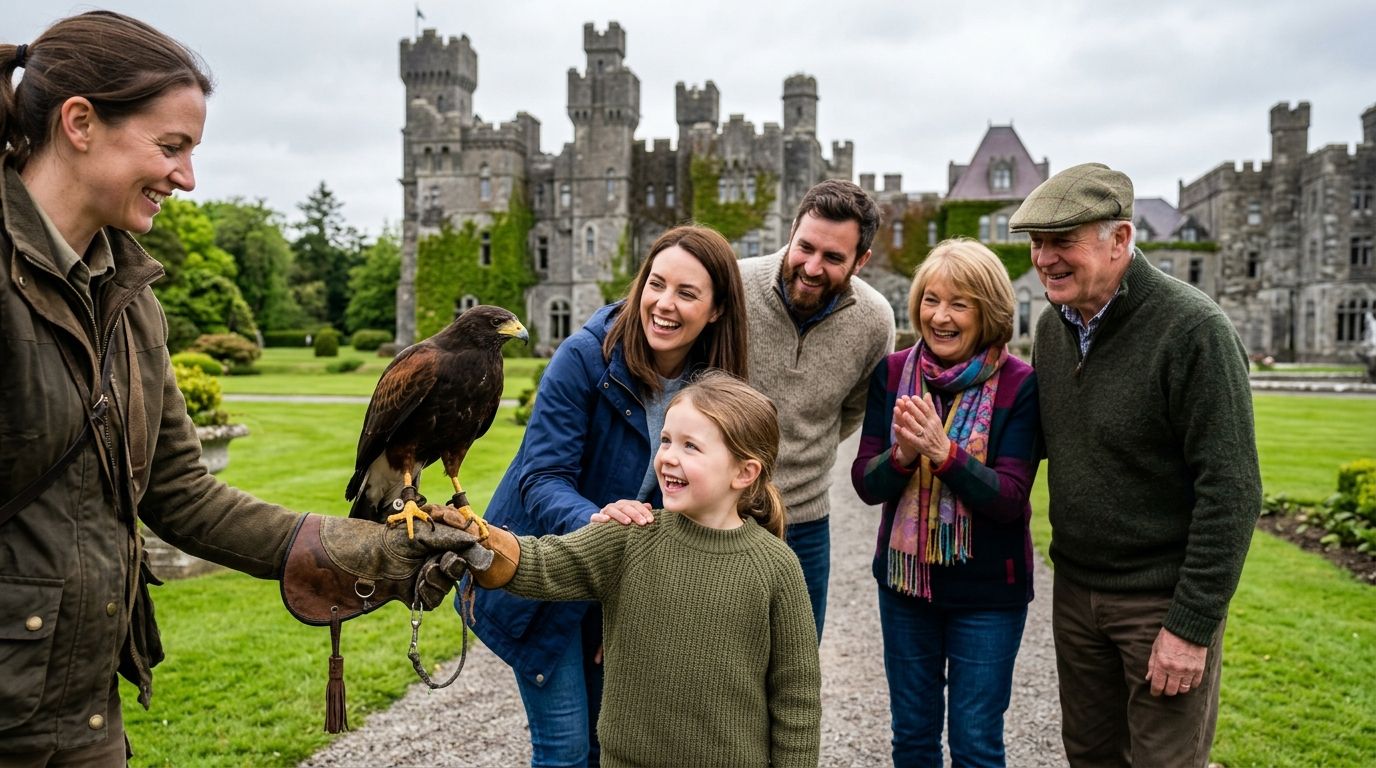
A castle in the morning, a coastal walk after lunch and music that evening: an appealing Irish holiday on paper. Add a long drive and three generations with different priorities, and the day starts to look crowded.
Planning a holiday with grandparents, parents and children means deciding which experiences to share and where individual plans can differ. Start with those decisions before filling the map with stops.
Agree priorities before choosing the route
Ask each traveller for one experience they particularly want, how long they enjoy walking between breaks and anything that makes an outing difficult. Include children in the conversation, and give everyone room to answer for themselves. Interests and stamina rarely follow neat generational lines.
For families planning Tours of Ireland, collecting those answers in a short itinerary brief gives the route a practical starting point. Specific preferences are more useful than a general request for family-friendly activities.
Separate priorities from possibilities. If visiting an ancestral parish is someone’s main reason for travelling, give it proper space. Build other outings around that visit instead of treating it as another stop to squeeze in.
Choose overnight bases that make breaks practical
Mark the priority outings on a map before choosing accommodation. Look for a manageable cluster. If most sit in Kerry, build around that area before adding a detour to Galway simply because both feature on the wish list.
Balance fewer accommodation changes against the journeys each base would require. Staying put saves packing; a well-placed second base might save repeated long drives.
Consider what happens when someone wants an afternoon off. Can they return independently, or would that require the group’s only vehicle? Check the actual route from the accommodation to meals and nearby amenities, including how someone would manage it alone.
Keep transfer days lighter. Packing, checking out and settling into new rooms already occupy part of the day. Save the most ambitious excursion for a day with fewer competing demands.
Plan one shared outing, with optional extras
Build each day around an experience everyone has agreed to, then leave room for different choices afterwards. Give the shared outing enough time before adding extras.
For example, a day could begin with a castle visit selected after checking its access arrangements. After lunch, some relatives might take a longer walk while others return to their accommodation, with everyone meeting again for dinner.
Make the arrangements explicit: who has transport, who accompanies children and where the group reunites. Anyone skipping an activity needs a workable alternative, rather than a long wait for everyone else.
Leave some time without a ticket or fixed starting time, too. That gives a leisurely lunch room to run on. An evening of traditional music can be followed by a slower morning rather than another early departure.
Check what each visit actually involves
Look beyond “family-friendly” to the details that affect your group: stairs, walking surfaces, seating and toilets. At a castle, establish which areas require steps. For a coastal outing, check the path surface, gradient and distance from parking. Consult the attraction’s official information and ask about anything unclear, distinguishing access to the visitor centre from access to the wider site.
Allow for the whole excursion. A driving estimate covers only part of it: finding parking, reaching the entrance, queuing, eating and taking breaks all need time. Add those elements before deciding whether another stop fits.
Apply the same care to accommodation. Confirm room layouts, lift access where needed and the route from the entrance to the bedroom. Assess these features against individual requirements rather than making assumptions about who will need easier access.
Keep an alternative and test the day’s plan
Choose a nearby indoor alternative for an outdoor-focused day, then check its opening arrangements and booking requirements. Pick somewhere the family genuinely wants to visit, with a journey and visit length that suit the revised day.
Give the schedule some flexibility. Decide which reservation matters most and which activities can move or be dropped if weather, tiredness or enthusiasm changes. A tightly sequenced chain of bookings leaves little room to adjust.
Before finalising the itinerary, ask three questions: can someone skip the optional part, can the day finish earlier, and is the alternative workable? Revise any arrangement that depends on everyone making the same choice.
Protect the experience everyone wants to share, then leave enough freedom for the rest of the day to suit the people taking it.